Uneven subfloors are one of the leading causes of flooring failure. Gaps, hollow spots, cracked planks, and loose seams almost always trace back to poor preparation.
After years in the trade, I’ve learned that successful installs follow the same pattern:
Measure → Prep → Test → Prime → Level → Finish
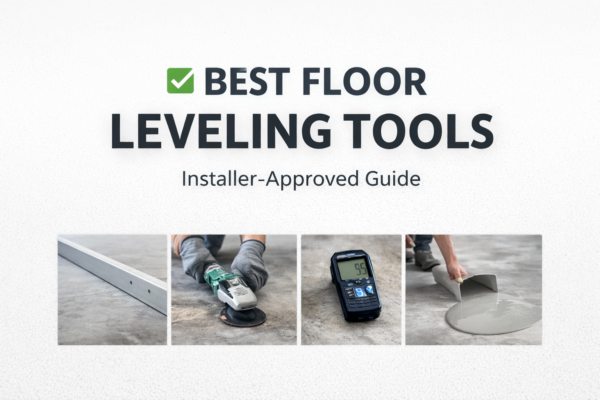
This guide covers the essential tools professionals use to create flat, stable subfloors for LVP, laminate, and engineered flooring.Before installing any luxury vinyl plank, make sure your subfloor meets manufacturer flatness standards. See our complete LVP Installation & Prep Guide for step-by-step installation details.
Disclosure: Home Flooring Answers participates in the Amazon Services LLC Associates Program. As an Amazon Associate, I earn from qualifying purchases at no extra cost to you.
🏆 Best Floor Leveling Tools (Quick Picks)
📏 T-Box Level
Good for quick checks when a full straight edge isn’t practical.
👉 ✅ View Best Deals on Amazon
🛠 Heavy-Duty Floor Scraper / Grinder
Removes debris, glue, and high spots before leveling.
👉 ✅ See Current Price on Amazon
💧 Concrete Moisture Meter
Prevents failure caused by hidden slab moisture.
👉 ✅ Check Price on Amazon
🧱 Professional Self-Leveling Underlayment
Creates flat, stable surfaces for LVP and laminate.
👉 ✅ View on Amazon
Why This Matters
Most leveling failures happen because installers skip one of these tools.
Using the right system:
✔ Saves time
✔ Prevents callbacks
✔ Protects your flooring investment
🔹 1. Floor Flatness & Measurement Tools

A long straight edge and level reveal low and high spots that can cause flooring failure if ignored.
Before applying any patch or leveler, you must verify subfloor flatness.
✅ 10-Foot Aluminum Straight Edge (Primary Tool)
This is the industry standard for checking flatness. It reveals dips and ridges that shorter tools miss.
Manufacturer tolerance is typically 3/16” over 10 feet.
If you’re installing vinyl plank, this flatness tolerance is critical. Learn more in our guide on how to prepare a subfloor for LVP.
👉 Johnson 6ft–10ft Extendable Plate Level
➕ 6-Foot Level (Secondary Option)
Useful for small rooms and spot checks.
Should never replace a full straight edge.
“Improper plank layout patterns like H-pattern installations can also cause visible seam repetition.”
🔹 2. Surface Preparation Tools

High spots and contaminants must be removed before leveling.
Floor Scraper
Removes adhesive, paint, drywall mud, and debris.
👉 See heavy-duty floor scrapers
Angle Grinder / Floor Grinder
Grinds down concrete seams and ridges.
👉 View grinders for floor prep
🔹 3. Moisture Testing Tools
Moisture is one of the biggest causes of flooring failure.
Before pouring any leveler, review our detailed concrete moisture testing guide for LVP installs.
Concrete Moisture Meter
Detects hidden slab moisture before leveling.
👉 Check moisture meters installers trust
🔹 4. Primers & Bonding Products
Primer is required for nearly all self-leveling products.
Skipping primer leads to:
❌ Cracking
❌ Bubbling
❌ Delamination
Self-Leveler Primer
Improves bonding and controls absorption.
👉 View professional floor primers
🔹 5. Patching & Skim Coat Products
Not every floor needs full self-leveling.
Floor Patch / Skim Coat
Best for cracks, feathering, and shallow dips under 1/8″.
👉 See recommended patching compounds
🔹 6. Self-Leveling Compounds

For larger dips and uneven slabs.
Self-Leveling Underlayment
Creates flat surfaces for LVP and laminate.
Always follow:
✔ Water ratios
✔ Working time
✔ Coverage rates
👉 View quality self-leveling compounds
🔹 7. Mixing & Application Tools
Proper mixing is critical.
Required Tools
- Heavy-duty bucket
- High-torque drill
- Mixing paddle
- Smoothing trowel
- Gauge rake (optional)
👉 See leveling application tools
🔹 8. Optional Pro-Level Finishing Tools
For large pours and multi-bag projects.
Spiked Roller
Releases trapped air and blends pours.
Does NOT fix bad prep.
🔧 Installer Tip: Why Leveling Jobs Fail
Most failures happen because of:
❌ Skipping primer
❌ Wrong water ratios
❌ Poor mixing
❌ Ignoring moisture
❌ Rushing prep
No tool can compensate for bad preparation.
❓ Frequently Asked Questions
Do I really need a 10-foot straight edge?
Yes. Short levels miss dips that cause failure.
Can I skip primer?
No. Skipping primer is one of the fastest ways to cause delamination.
Is self-leveler hard to use?
Not if you follow directions. Rushing is the biggest mistake.
What tool matters most?
The straight edge. Everything starts with measurement.
🏁 Recommended Floor Leveling System
Follow this order:
1️⃣ Check flatness
2️⃣ Remove high spots
3️⃣ Test moisture
4️⃣ Apply primer
5️⃣ Patch defects
6️⃣ Pour self-leveler
7️⃣ Use proper tools
This prevents most flooring failures.
📌 Who This Guide Is For
This guide is ideal if you are:
✔ Installing LVP over concrete
✔ Working in basements
✔ Preparing older subfloors
✔ Doing DIY installs
✔ Fixing recurring problems
📢 Disclosure
Some links on this page may be affiliate links. Recommendations are based on real-world installation experience.
Leave a Reply