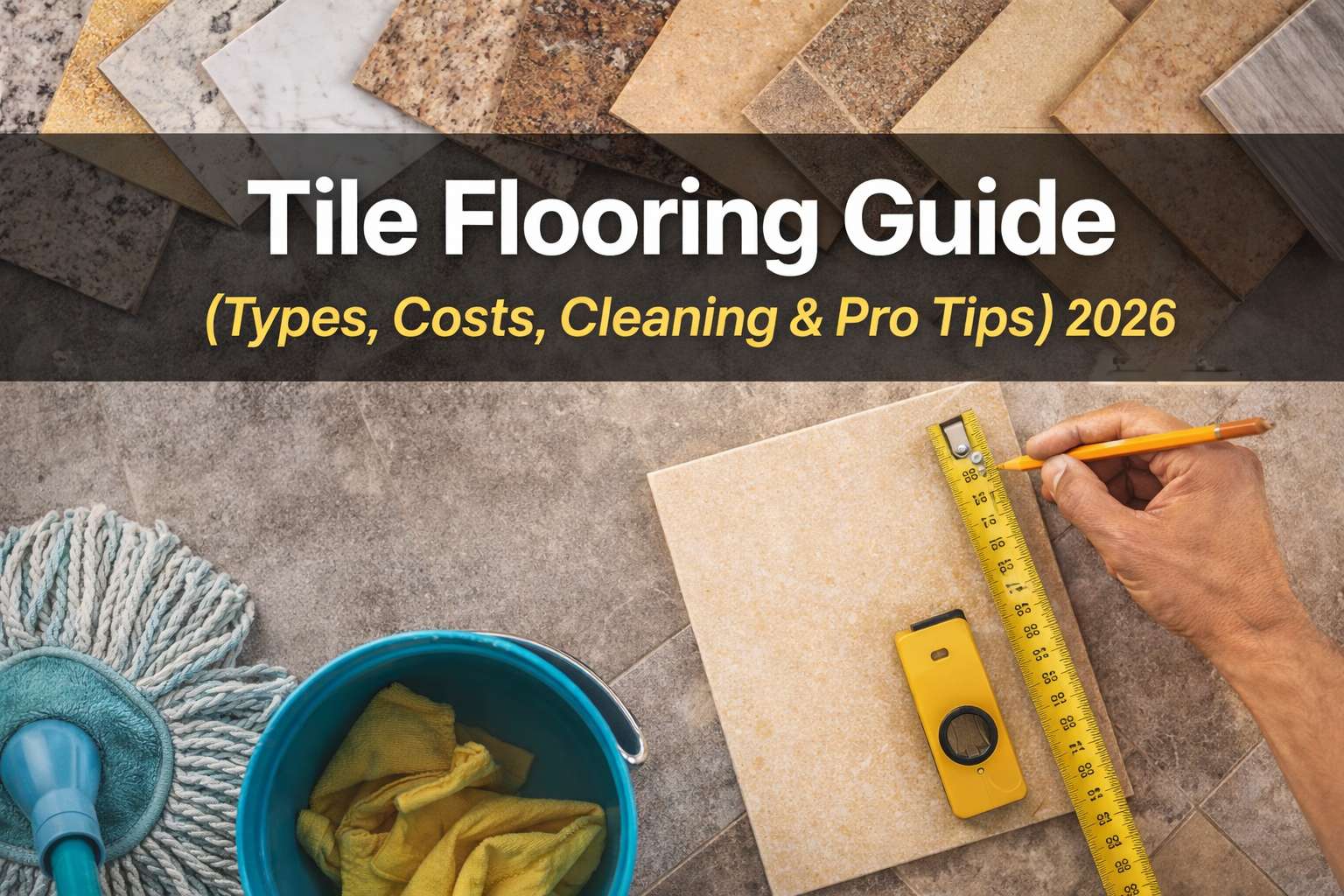
Tile flooring is one of the most durable and versatile flooring options for kitchens, bathrooms, entryways, and high-traffic homes. But choosing the wrong tile — or maintaining it incorrectly — can lead to costly repairs, grout damage, and permanent surface wear.“In this tile flooring guide, we’ll break down types, costs, and crucial prep steps.”
Your Complete Tile Flooring Guide.
Understanding the different types of tile, how to maintain them properly, and where they work best can help homeowners avoid expensive flooring mistakes.
Types of Tile Flooring
Porcelain Tile
- Highly Water-resistant
- Extremely dense and durable
- Excellent for floors and high-traffic areas
Ceramic Tile
• Easier to cut and install
• Budget-friendly
• Common in kitchens and bathrooms
Natural Stone Tile
• Includes marble, slate, and travertine
• Requires regular sealing
• Higher maintenance but very durable
How to Clean and Maintain Tile Floors
Tile floors are durable, but improper cleaning can permanently damage grout, glaze, and sealers.
Sweep or vacuum regularly to remove dirt and grit that can wear down grout lines. Mop with warm water and a pH-neutral tile cleaner to avoid damaging the tile surface.
If you’re dealing with cloudy residue after installation, see our full guide on grout haze removal and how to remove it safely.
Subfloor Preparation for Tile
Many tile failures are not caused by the tile itself.
They happen because of:
• Movement in the subfloor
• Improper underlayment
• Inadequate floor stiffness
• Poor thinset coverage
• Uneven surfaces
Tile requires a very stable and properly prepared surface. Even small movement in the floor structure can cause cracked grout, loose tiles, or hollow spots.
Professional installers often use:
• Cement backer board
• Uncoupling membranes
• Proper thinset mortars
• Floor flattening compounds
Proper preparation dramatically increases the lifespan of tile flooring and prevents expensive repairs later.
Common Tile Flooring Mistakes
• Using harsh acids on polished stone
• Not sealing grout
• Skipping expansion gaps
• Using the wrong cleaners
• Poor substrate preparation
These mistakes can shorten the lifespan of tile floors and cause issues like cracked grout, discoloration, or loose tiles.
Tile vs Other Flooring
Tile flooring is often compared to other popular flooring types like luxury vinyl plank, hardwood, and laminate.
Each option has advantages depending on the room, moisture levels, budget, and lifestyle.
If you’re comparing flooring types, see our guides on:
• Carpet vs LVP
• Best Flooring for Pets
• Waterproof Flooring Options
These comparisons can help homeowners choose the best flooring for their specific needs.
Tile Flooring FAQs
How often should tile floors be cleaned?
Tile floors should be swept or vacuumed at least once per week and mopped every 1–2 weeks depending on traffic. Kitchens and entryways may require more frequent cleaning to prevent grit from scratching tile surfaces and wearing down grout.
What is the best cleaner for tile floors?
A pH-neutral tile cleaner or mild dish soap mixed with warm water works well for regular maintenance.
Avoid harsh acids or abrasive cleaners, especially on natural stone, as they can permanently damage the surface and grout.
Why does my tile floor look cloudy after cleaning or installation?
Cloudy residue is usually caused by grout haze, cleaner buildup, or hard-water minerals left on the surface.
If standard cleaning does not remove the haze, you may need a dedicated grout haze remover designed for your tile type.
For organic stains, pet accidents, or odors in nearby flooring or grout, enzyme cleaners work differently than traditional cleaners. See our full guide on enzyme cleaners for deep odor and stain removal.
Can I use vinegar on tile floors?
Vinegar can be used on most ceramic and porcelain tile in small amounts, but it should not be used on natural stone such as marble, travertine, or limestone.
Acidic cleaners can permanently etch and dull stone surfaces.
Does tile flooring need to be sealed?
Ceramic and porcelain tile usually do not require sealing, but grout lines almost always should be sealed to prevent staining and moisture absorption.
Natural stone tiles like marble, travertine, and slate must be sealed regularly to prevent damage and discoloration.
How long does tile flooring last?
Properly installed and maintained tile flooring can last 20–50 years or more. Porcelain tile typically has the longest lifespan due to its density and moisture resistance.
Is tile flooring good for pets?
Yes. Tile is scratch-resistant, waterproof, and easy to clean, making it a great flooring choice for homes with pets.
Area rugs can improve comfort and reduce slipping for older pets.
Can tile be installed over existing flooring?
Tile can sometimes be installed over existing surfaces like vinyl or concrete if the subfloor is perfectly flat, clean, and structurally sound.
However, removing old flooring usually provides the best long-term results and helps prevent future cracking or adhesion problems.
If you’re deciding between flooring systems, our carpet vs LVP comparison guide explains when full flooring removal makes the most sense.
Installer Tip
After decades working in flooring installation, one of the biggest mistakes homeowners make is assuming tile will hide subfloor problems.
Tile actually requires one of the most stable and well-prepared subfloors of any flooring type.
Proper preparation prevents cracked grout, loose tiles, and hollow spots.
— Home Flooring Answers
“…see our full guide on grout haze removal — how to remove it safely and effectively.”
Internal link opportunities:
Leave a Reply